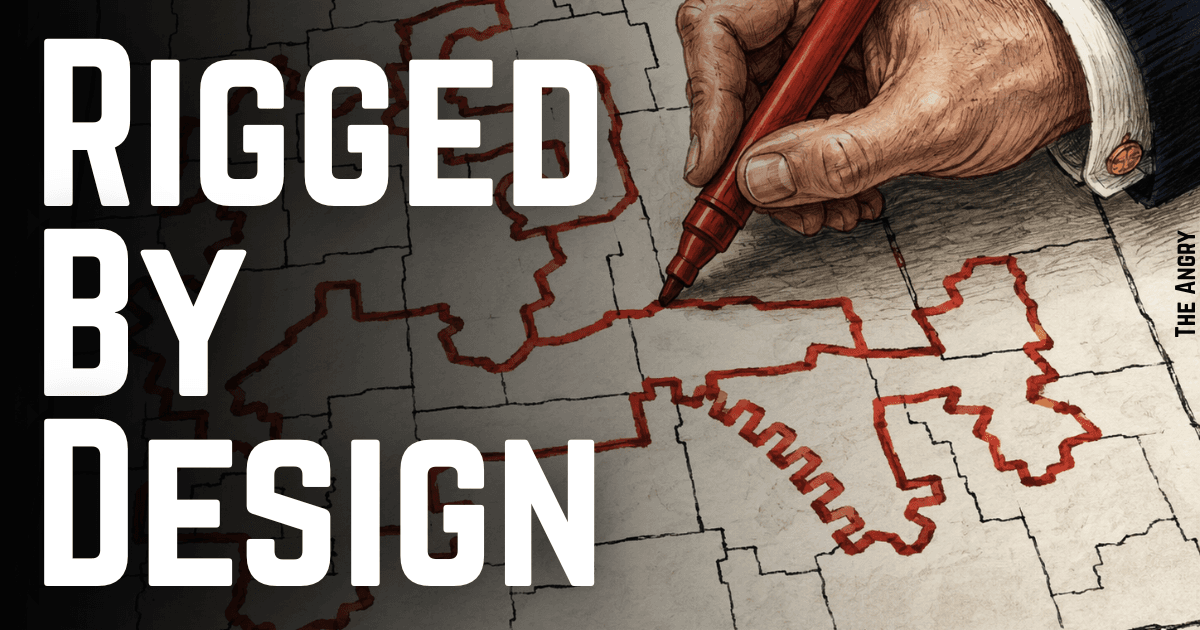
BLUF: A man named Yuri Bezmenov worked for the Soviet KGB. In 1984, he sat in front of a camera and described how to destroy a country from the inside. Four stages. Demoralization. Destabilization. Crisis. Normalization. He described it as a foreign operation and was only half right. Foreign adversaries exploited vulnerabilities created by Americans. Companies profit from them today. Russia did not repeal the Fairness Doctrine. China did not write Section 230. No foreign government forced us to build media empires that run on rage. The playbook was foreign but the infrastructure was homemade.
A Dead Man's Warning
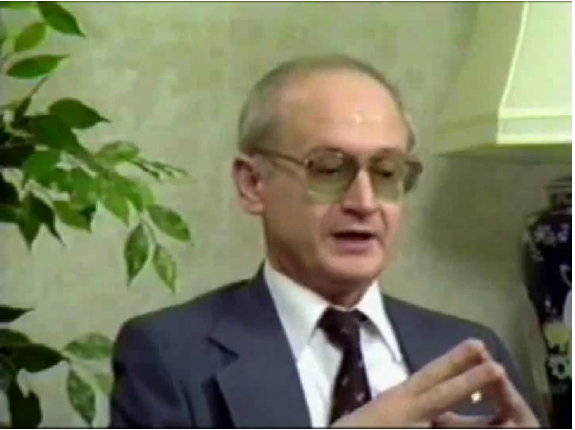
Yuri Bezmenov died in Windsor, Ontario in 1993. He was 53. He spent the last 20 years of his life giving talks about how the Soviet KGB used a country's own people to tear it apart from the inside. Almost nobody listened. Then a video game trailer used his voice.
In August 2020, the Call of Duty: Black Ops Cold War trailer opened with a clip of Bezmenov explaining how to break a country from the inside. Millions of teenagers heard him for the first time. The YouTube algorithm did the rest. A 36-year-old recording that almost nobody watched while he was alive now pulls more views than some network news segments.
He did not get all the details but he did predict the shape. The four-stage structure. The patience of the operation. The simple fact that the most powerful weapon in the playbook is a regular person spreading someone else's message and feeling good about doing it. Without his framework, the dots stay scattered. With it, you can name what you are looking at.
Bezmenov described the enemy doing something to America. The harder and more useful truth is that America was doing something to itself at the same time. He described a foreign doctrine designed to fragment a country's media, sort its population into warring tribes, and erode trust in institutions until people could no longer tell real from false. American lawmakers, media executives, platform engineers, and political operatives were building the same machine across four decades, not for ideology, but for money and power.
The enemy found an open door because we left it open. And kept leaving it open. And in some cases built a better door and left that one open too.
What makes me genuinely angry is not what Russia did to us. Russia is going to do what Russia does. What makes me angry is that we built the target, handed them the ammunition, and are now running the same operation on ourselves for profit. The machine does not need a handler anymore. It has a business model. And we built that too.
This post is not an indictment of Russia. It is a mirror. A foreign adversary looked at America, found the cracks, and poured gasoline. We dug the cracks. We sold the gasoline. The parts we built are ours to fix. Nobody else is going to do it.
The Evidence
What Is a "Useful Idiot"
The phrase gets credited to Lenin. Historians have never found a primary source for that. (FACT) In 2026, most people know the term because of Bezmenov, who used it repeatedly in his lectures and interviews in the early 1980s. (FACT)
The KGB's definition is simple. A useful idiot is someone who spreads your message without being paid to do it, sometimes without knowing the message came from you in the first place. Their belief is what makes them useful. A paid agent looks suspicious. A friend who genuinely believes it and passes it along does not.
The sincerity is the weapon. Most useful idiots in 2026 are not paid. They are not stupid. They are sincere, fired-up people who are certain they are on the right side. This isn't limited to a single political ideology. The technique scales because the share button is free. Someone manufactures the ammunition. The useful idiot carries it for nothing.
Sources: Thomas Rid, Active Measures, Farrar, Straus and Giroux, 2020; Christopher Andrew and Vasili Mitrokhin, The Sword and the Shield, Basic Books, 1999.
The Four Stages
Bezmenov broke the plan into four stages.
Stage 1: Demoralization. He said it took 15 to 20 years back in 1984. The goal: make people unable to recognize objective reality. His exact words: "A person who is demoralized is unable to assess true information. The facts tell nothing to him."
Stage 2: Destabilization. Two to five years. Targets: the economy, foreign policy, and the defense system.
Stage 3: Crisis. About six weeks of major disruption.
Stage 4: Normalization. The new order locks in.
All four stages matter. This deep dive spends the most time on Stage 1 because everything downstream depends on it. Stage 1 needed specific conditions to work. Those conditions had to already exist before any foreign operation could use them. Americans spent forty years building them.
Source: Internet Archive, Soviet Subversion of the Free World Press, full Bezmenov/Griffin interview, 1984; Small Wars Journal, December 2025.
The Architecture America Built
The doctrine Bezmenov described needed four things: a fragmented media environment, a population sorted into warring tribes, institutions people had stopped trusting, and a system that could move outrage faster than facts.
Americans built all four. Each law had a reasonable argument behind it when it passed.
Fairness Doctrine repeal (1987). The Federal Communications Commission eliminated the rule requiring broadcasters to present contrasting viewpoints on public issues. The stated reason was deregulation. The practical result was that the economic incentive to air one-sided content with no correction obligation became unlimited. Talk radio exploded within two years. Cable news followed. By the late 1990s, the most profitable voices in American media were the angriest ones. The full history of that repeal fills books and the politics behind it were complicated. What matters is the outcome: after 1987, showing you the other side of anything became optional. The money went where the anger was.
Sources: FCC History; Pew Research on partisan media consolidation.
Telecommunications Act of 1996. This law let a single company own far more radio and TV stations in a market than previous law allowed. Local news, historically the anchor of community-level information, began a decline that has not stopped. By 2023, more than 2,500 local newsrooms had closed since 2005. When people stop trusting national media, a local alternative used to exist. Now it often does not. When the local newsroom closed, people didn't stop needing information. They went online. And online was already being built to make them angrier.
Sources: Pew Research; University of North Carolina Local News Project.
Section 230 of the Communications Decency Act (1996). This provision shielded online platforms from legal liability for content their users post. The intent was to let the early internet grow without being crushed by defamation lawsuits. The result was that the largest information systems in human history operate with no accountability for what flows through them. Every other publisher in American history has been legally liable for what it puts in front of people. Platforms are not. The algorithms they built reward outrage and tribalism because those things keep people scrolling, and there is no legal consequence for where that leads.
Sources: Communications Decency Act § 230; Electronic Frontier Foundation explainer.
What the law did not account for is the algorithm. In 1996, a platform was a bulletin board. You posted something. It appeared. People scrolled past it newest to oldest. The platform had no role in deciding what you saw. That is the world Section 230 was written to protect.
Then the feed changed. Platforms stopped serving content in the order it was posted and started serving content based on what kept you on the app the longest. Outrage keeps people on apps the longest. The business model followed the data. The chronological timeline died and the engagement algorithm replaced it. Now the feed is a curation engine built to maximize attention, which in practice means it buries the calm and amplifies the charged.
A newspaper editor who decides to run a false story on the front page carries legal liability for that call. When a platform's algorithm decides to serve disinformation to 40 million people because the engagement numbers said to, nobody is liable. The platform made an editorial decision. It just used code instead of a newsroom. Section 230 still treats that algorithm the same as a 1996 bulletin board that showed posts in the order they arrived.
The law was never designed to cover this. Nobody in 1996 saw the algorithm coming. That is not the problem. The problem is that in 2026, we still have not updated the law to reflect what actually exists.
Citizens United v. FEC (2010). The Supreme Court held that political spending is protected speech and that corporations and outside groups could spend unlimited money on political campaigns. Dark money flooded into political media. The financial incentive to inflame rather than inform grew into an industry with earnings reports.
Source: Citizens United v. FEC, 558 U.S. 310 (2010); OpenSecrets dark money tracking.
No foreign government authored any of these. They were American decisions, made by Americans, defended by Americans, and still defended today by the industries that profit from them. Assembled together, they built everything Bezmenov said a foreign operation would need to run Stage 1 demoralization. The KGB did not build it. We did.
The Receipts
That is the infrastructure. Here is what got loaded into it. The vulnerability never changed because we never fixed it.
Receipt 1: Operation Denver (1980s)
In July 1983, an unsigned letter appeared in the Indian newspaper Patriot. The letter claimed the U.S. military had invented the AIDS virus at a lab in Maryland. It was attributed to a "well-known American scientist." No such person existed.
The letter was planted by KGB Service A and the East German Stasi as the opening move of Operation Denver, also called INFEKTION. (FACT, confirmed in declassified Stasi archives.) By the late 1980s, the campaign had reached more than 80 countries in over 30 languages.
Sources: Wilson Center; MIT Press Reader; Wikipedia: Operation Denver.
The vulnerability it needed: a press with no obligation to trace a story's origin. One real newspaper ran it. Every other outlet could then cite that paper. The laws protecting a free press, designed to protect speech, also made it easy to inject one lie and watch it travel.
It took the KGB years, a full intelligence apparatus, and a global network of state media to move one lie worldwide. That was the expensive version.
Receipt 2: Internet Research Agency, 2016
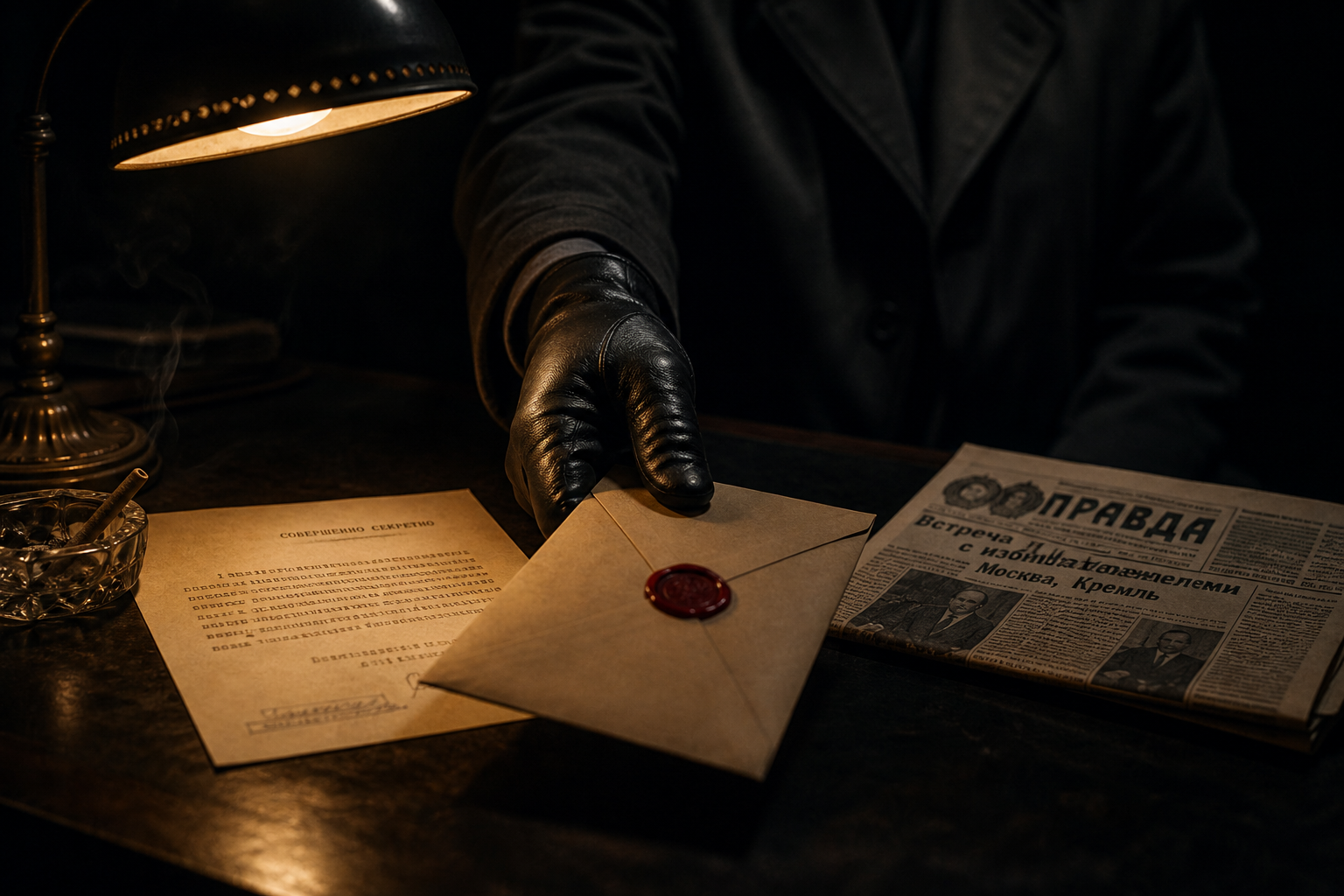
A St. Petersburg troll farm called the Internet Research Agency ran approximately 3,500 Facebook ads and 80,000 organic posts that reached an estimated 126 million Americans, per Facebook's own numbers submitted to Congress. (FACT) The operation was funded by Yevgeny Prigozhin and indicted by the Mueller investigation in February 2018.
Sources: Mueller Report, March 2019; Senate Intelligence Committee Vol. II, October 2019; DOJ indictment, USA v. Internet Research Agency et al.
They ran fake accounts posing as Black Lives Matter activists. They ran fake accounts posing as Blue Lives Matter supporters. Same operation. Both sides. The Senate Intelligence Committee found that race was the IRA's primary target, above every other topic they worked. In Dallas, in July 2016, IRA operatives used a Facebook group called "Heart of Texas" to organize a Blue Lives Matter counter-protest directly across the street from an organic BLM demonstration. Two crowds facing each other. One handler in St. Petersburg. The goal was never to convince Americans of a specific thing. The goal was to take the division Americans already had and turn it into a street confrontation.
Sources: Senate Intelligence Committee Vol. II; NPR, "Senate Report Finds Russians Used Social Media To Target Race In 2016," October 2019.
The vulnerability it needed: social media platforms with no publisher liability, algorithms that sorted users into ideological clusters, and feeds that served outrage-confirming content because outrage drove engagement. Section 230 wrote the liability shield. American engineers built the algorithm. The IRA used what was already there.
A building full of people in another country found your uncle's Facebook feed, mapped his tribe, and spent 18 months making him angrier. American law made that free and legal.
Bezmenov described the Soviet version. He had no idea Americans would run the same operation on themselves, for profit, without a single foreign asset in the loop.
Receipt 3: Doppelganger, 2022-Present
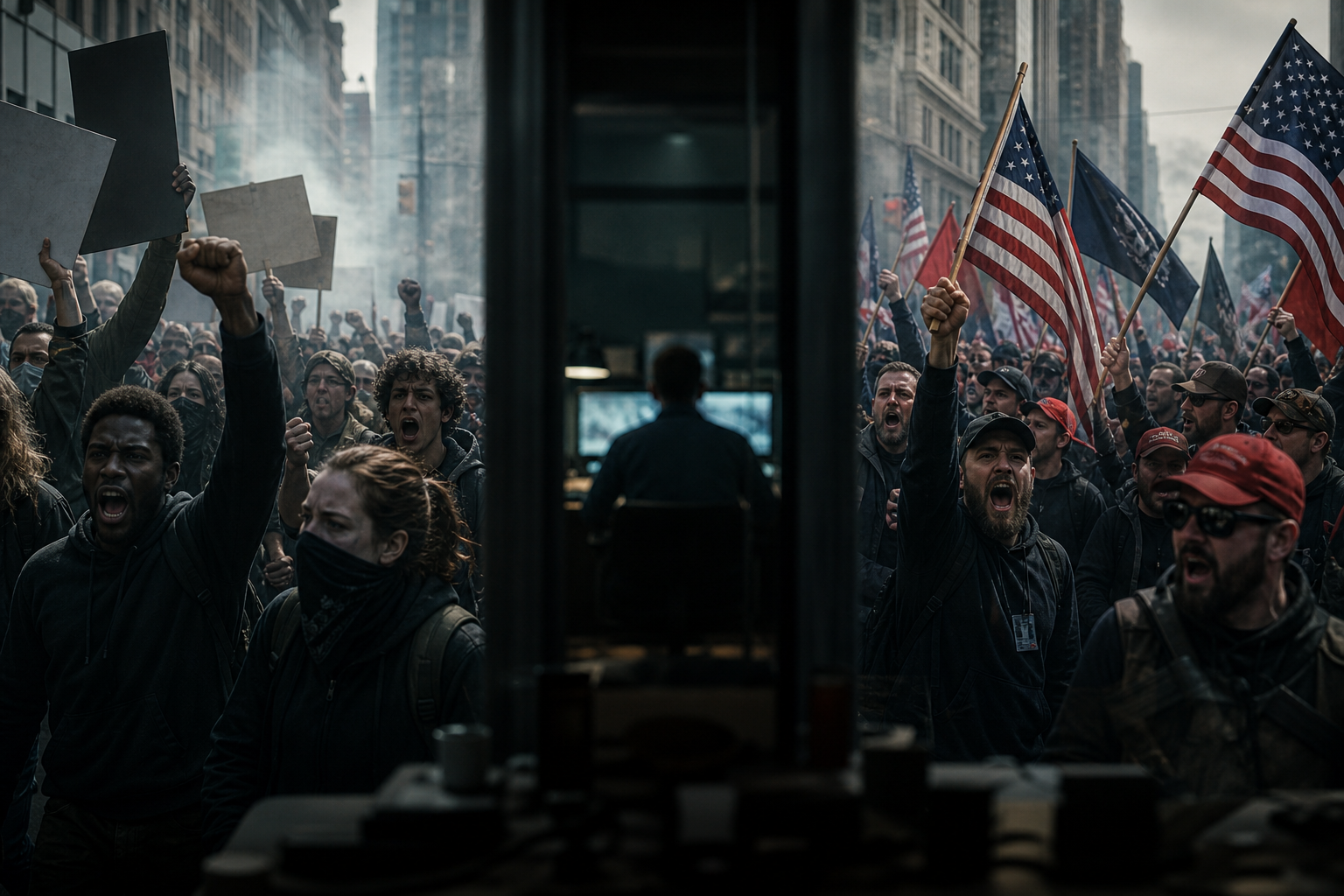
A coordinated Russian operation began cloning the websites of legitimate Western news outlets including Bild, Le Monde, and the Washington Post, seeding Kremlin-aligned stories that looked as if they came from those outlets. The operation was documented by EU DisinfoLab, Meta, and the Atlantic Council's Digital Forensic Research Lab, and it was still running through at least 2024 despite repeated takedowns. (FACT)
In 2024, Romania's presidential election was annulled after evidence of Russian-linked TikTok manipulation surfaced. Attribution is still under review. (FACT-with-active-investigation)
Sources: EU DisinfoLab reports; Meta Adversarial Threat Reports; Atlantic Council DFRLab; AP/Reuters on the Romanian annulment.
The vulnerability it needed: a population so uncertain about which sources to trust that a cloned website carries the same credibility as the real one. Thirty years of partisan media and the collapse of local newsrooms produced that population. Counterfeiting works best when authenticity is already in doubt. We spent three decades building that doubt. The operation moved into a market we prepared.
The Domestic Version: Same Playbook, Different Motive
The same architecture that foreign intelligence services exploit is being run daily by domestic actors for profit and political power. That is the part that should make you furious, because pointing at Russia does nothing to fix it.
Partisan media on both sides runs the same outrage amplification loop the IRA ran, not for ideology and not for a foreign government, but because anger drives clicks, subscriptions, and donations. The business model of demoralization is domestic industry. (FACT, sourced via Pew Research on partisan media revenue models; academic work on how extreme partisanship drives fundraising.)
Political fundraising has industrialized outrage. The most effective fundraising appeals are not about policy. They are about the threat the other side poses. The worse things get, the more money flows. Everyone inside the machine has an incentive to keep it running.
Sources: OpenSecrets fundraising analysis; academic literature on partisan fundraising and negative partisanship.
Race is the clearest example of what this machine actually costs. Through the 1980s, 1990s, and into the 2000s, American race relations were improving by every measure Gallup tracked. In 2004, 72 percent of Americans rated Black-White relations as "good," the highest number ever recorded. I grew up in that trajectory. It was real. The work was not finished and nobody thought it was, but the direction was not in dispute. (FACT: Gallup Race Relations Historical Trends.)
Then the outrage machine found race as a revenue source, right at the moment America elected its first Black president. The IRA made it their primary target. Domestic partisan media discovered that racial grievance from every direction, both sides, all day, drove clicks and donations at rates almost nothing else could match. The algorithm sorted people into racial filter bubbles and kept them there because the engagement numbers said to.
By 2018, 29 percent of Americans told pollsters that race relations had gotten worse since the 1960s. (FACT: YouGov/Economist poll.) The 1960s. When Black Americans could be legally barred from voting booths, restaurants, and schools. When "Whites Only" was not a historical footnote. It was municipal law. A significant chunk of the country, fed years of manufactured outrage by profit-driven algorithms and foreign troll farms working the same fault line from both sides, concluded that 2018 was worse than Jim Crow. That is not a political opinion. That is a measurement of how thoroughly Stage 1 demoralization had worked. Go back to Bezmenov: "A person who is demoralized is unable to assess true information. The facts tell nothing to him." We watched that sentence become a poll result.
Sources: Gallup Race Relations Historical Trends; Newsweek, "Race Relations Have Gotten Worse Since the 1960s, Nearly 30 Percent of Americans Say in Poll," 2018; NPR, "Senate Report Finds Russians Used Social Media To Target Race In 2016," October 2019.

The people who scream the most about Russian interference are often executing the Russian playbook better than any Russian could. If you spent the last four years building your entire identity around hating one man, if Trump lives rent-free in your head from the moment you wake up to the moment you go to sleep, Russia did not need to buy ads for you. You were already in the bag. Sincerely, passionately and for free. That is Stage 1 demoralization completing its circuit in real time. The psyop does not require you to love the enemy. It requires you to be so consumed by the other side that you cannot think straight. Check the box.
And the consequences are not abstract. In July 2024, a gunman opened fire at a Trump rally in Butler, Pennsylvania. He grazed Trump's ear, killed a father of two, and wounded two others. Two months later, another attempt in West Palm Beach. On April 25, 2026, Cole Tomas Allen, 31, ran a security checkpoint at the Washington Hilton during the White House Correspondents' Dinner carrying a 12-gauge shotgun. He fired once, hitting a Secret Service agent in the chest. The agent's vest stopped the round. Allen was charged with attempted assassination of the President and faces life in prison. (FACT: DOJ press release, April 27, 2026.) Three attempts. Under two years. And enormous chunks of American media treated those events as a footnote because the target was someone they had spent years telling audiences to despise. That is not resistance. That is what manufactured hatred looks like when it lands. The machine built the climate. People absorbed it. Some of them acted on it. And we moved on because we had gotten so comfortable with the rage that the consequences of it barely registered.
This is not a defense of Trump. Trump has his own list and I'll get there in a future post. This is a description of how a trap works and what it costs. Russia built the pressure. The left walked straight into it and called it resistance. While they performed four years of concentrated outrage, the laws that built this mess stayed on the books. The institutions they claimed to care about stayed broken. The fundraising machine on their side collected billions from people too angry to ask where the money went. They felt righteous the entire time. The operation wanted exactly that.
And here is where Bezmenov becomes undeniable. After every one of those attempts, including events with video footage, DOJ indictments, and a hospitalized Secret Service agent wearing a dented vest, a large portion of Americans concluded they were staged. Not skeptical. Not asking questions. Staged. Deliberately manufactured. From both sides of the aisle. Some on the left said Butler was a Trump setup to gain sympathy. Some on the right said the WHCD shooting was a false flag. They cannot agree on who did the faking. Go back to Bezmenov's exact words: "A person who is demoralized is unable to assess true information. The facts tell nothing to him." That is not a warning anymore. That is a description of your social media feed. When three documented assassination attempts produce competing conspiracy theories faster than they produce consensus, Stage 1 demoralization is not coming. It is done.
A Short Note On the Man
Bezmenov was not a senior KGB officer. He was a Novosti Press Agency journalist co-opted to support KGB work at the Soviet mission in India. He defected in 1970 and spent the rest of his life in Canada warning anyone who would listen.
Declassified Canadian files show his handlers assessed him as working with fringe groups of little consequence. His daughter said he saw himself as a prophet who found Soviet plots everywhere. He died in 1993 and never saw the internet.
None of that changes the doctrine. The Mitrokhin Archive, the Stasi files on Operation Denver, the Church Committee report, and Thomas Rid's Active Measures all confirm the playbook without needing Bezmenov as a witness. He gave us the frame. The frame stands.
Sources: Wikipedia: Yuri Bezmenov; University of Toronto Canada Declassified.
The Analysis
ANALYSIS: Bezmenov described Stage 1 demoralization as a foreign operation targeting institutions. The more uncomfortable read is that American institutions ran the same operation on themselves. The Fairness Doctrine repeal did not require a single Soviet agent. The Telecommunications Act did not need foreign interference to pass. The engagement algorithm was built in California by people optimizing for quarterly earnings. The doctrine runs wherever someone runs it.
ANALYSIS: The IRA's 2016 operation was effective because the preparatory work was done before they arrived. American polarization was already there. They mapped it and spent roughly $1.25 million a month amplifying divisions Americans already held. (FACT: Senate Intelligence Committee Vol. II estimate.) Section 230, the cable news revenue model, and two decades of algorithmic sorting had done the heavy work. The IRA moved in after the field was cleared.
ANALYSIS: The profit motive is what makes 2026 worse than anything Bezmenov could have imagined. In 1984, the Soviet state had to deliberately fund and run active measures as a directed program. Real money. Real agents. Real infrastructure. In 2026, the same outcomes run automatically as a byproduct of American companies chasing quarterly earnings. The platform's goal is engagement. Demoralization drives engagement better than anything else they have ever found. Nobody planned that outcome. The algorithm discovered it on its own. And now the operation is self-funding and self-replicating, running at a scale the KGB never touched, for profit, not ideology. No handler needed. No foreign funding required. Americans do it to each other every single day, get paid for it, and call it content. The enemy's dream became a business model. That is the part that should make you genuinely angry, because there is nobody to arrest for it.
FACT: American trust in institutions is at or near historic lows across every major poll. Edelman Trust Barometer 2025. Pew Research on trust in government, 2024. Gallup Confidence in Institutions, 2024.
ANALYSIS: The architecture does not fix itself because the people with the power to change it are the same people who benefit from it staying broken. Partisan media executives profit from the outrage machine. Political operatives profit from the fundraising machine. Platform companies profit from the engagement machine. All of it is legal. None of it requires coordination to keep running.
SPECULATION: The most dangerous version of Stage 4 normalization looks nothing like the Soviet Union. It looks like a country so distrustful of every institution, image, and news report that any actor, foreign or domestic, can do anything and nobody can prove it happened. The data is consistent with that trajectory. The data does not prove it. This is my read. Take it as such.
The Implications
We owe Bezmenov a debt he never collected. He spent the back half of his life warning a country that mostly ignored him. He was right about the shape of what was happening. He was wrong that it was coming only from the outside. The outside found an open door because we left it open. And in some cases, actively lobbied to keep it open because it was profitable.
A useful idiot in 2026 looks nothing like a Soviet sympathizer. They are the person who shares a post without checking who benefits from the share. They are the person who clicks on content that makes them angrier without asking who earns from the click. They are the person who votes against the other side without ever asking what their own side built. Most of the people running this playbook on Americans today are not in St. Petersburg. They are in New York, Los Angeles, and Washington, drawing a salary from the same dynamics Bezmenov described.
The blame for this does not live in Moscow. Russia found the crack. Americans dug it. Americans paved it. Americans built an industry on top of it with quarterly earnings reports. That is the shitty part, because Russia is not going to reform American media law. Russia is not going to shut down the partisan fundraising machine. Russia is not going to hold platforms accountable for what flows through them.
Only we can do those things.
We haven't.
And every day we spend pointing at the enemy for the door we left open is another day the machine runs. Another day the algorithm sorts us. Another day the fundraising email lands. Another day someone shares something without checking because it confirmed what they already believed. The operation is self-replicating. Nobody has to run it anymore. We run it ourselves, for free, and with conviction.
Wake up to that. Or keep being useful.
PLAN OF ACTION:
Stop blaming the enemy for the door you left open.
Before you share, ask who profits from the share.
Learn one law that built this. Fairness Doctrine. Section 230. Citizens United. Pick one. Know what it did.
Stop rewarding the outrage machine with your attention, your money, and your vote.
Kane
Sources & Further Reading
Primary Sources
- Internet Archive: Soviet Subversion of the Free World Press, full Bezmenov/Griffin interview, 1984.
- Internet Archive: Love Letter to America by Tomas Schuman (Yuri Bezmenov), 1984.
- Senate Select Committee on Governmental Operations (Church Committee), Final Report, April 1976.
- Senate Select Committee on Intelligence, Russian Active Measures Campaigns and Interference in the 2016 U.S. Election, Volume II, October 2019.
- USA v. Internet Research Agency LLC et al., DOJ indictment, February 2018.
- Citizens United v. FEC, 558 U.S. 310 (2010).
- University of Toronto, Canada Declassified: "Chaos Agent" Yuri Bezmenov collection.
- DOJ Office of Public Affairs: "Suspect in White House Correspondents' Dinner Shooting Charged with Attempt to Assassinate the President," April 27, 2026.
Secondary Sources
- Christopher Andrew and Vasili Mitrokhin, The Sword and the Shield: The Mitrokhin Archive and the Secret History of the KGB, Basic Books, 1999.
- Thomas Rid, Active Measures: The Secret History of Disinformation and Political Warfare, Farrar, Straus and Giroux, 2020.
- Wilson Center, "Operation Denver: KGB and Stasi Disinformation regarding AIDS."
- MIT Press Reader, "Lessons From Operation Denver, the KGB's Massive AIDS Disinformation Campaign."
- Pew Research Center, newsroom closure data; partisan media research.
- University of North Carolina Local News Project.
- Gallup Race Relations Historical Trends.
- Newsweek, "Race Relations Have Gotten Worse Since the 1960s, Nearly 30 Percent of Americans Say in Poll."
- EU DisinfoLab, Doppelganger operation reports.
- Atlantic Council Digital Forensic Research Lab, ongoing operations tracking.
- OpenSecrets, dark money tracking and fundraising analysis.
- Small Wars Journal, Bezmenov four-stages summary, December 2025.
- Edelman Trust Barometer, 2025.
- Pew Research Center on trust in government, 2024.
- Gallup, Confidence in Institutions, 2024.