
BLUF: Every ten years, politicians redraw the lines that decide who votes where. In 2025 and 2026, they stopped waiting for the census. Virginia's Supreme Court just threw out a redistricting vote that regular people approved at the ballot box. Tennessee just wiped out its only majority-Black congressional district. The Supreme Court just made it nearly impossible to stop either one. This is a 200-year-old problem. Both parties do it. The courts have mostly looked the other way. Here is how it works, where it came from, and why nobody in power wants to fix it.
What It Actually Is
Most people have heard the word "gerrymander" but couldn't tell you what it means past "something politicians do with maps." Fair enough. That gap is exactly what the people drawing the maps are counting on.
Here is how it works.
The U.S. Constitution requires a census every ten years. Based on that count, Congress figures out how many House seats each state gets. That part is locked in by law. The part that is NOT locked in is how each state draws its district lines. Most states let the legislature do it. A few use an independent commission. Either way, somebody is holding the pen.
The two tools every map-rigger uses are called packing and cracking.
Packing means stuffing as many of the other party's voters as possible into one district. Sure, they win that seat. By a landslide, even. But all those extra votes beyond what they needed are wasted. They don't go anywhere.
Cracking means chopping up the other party's voters and spreading them across several districts. Now they're a small minority in each one, and they can't win any of them.
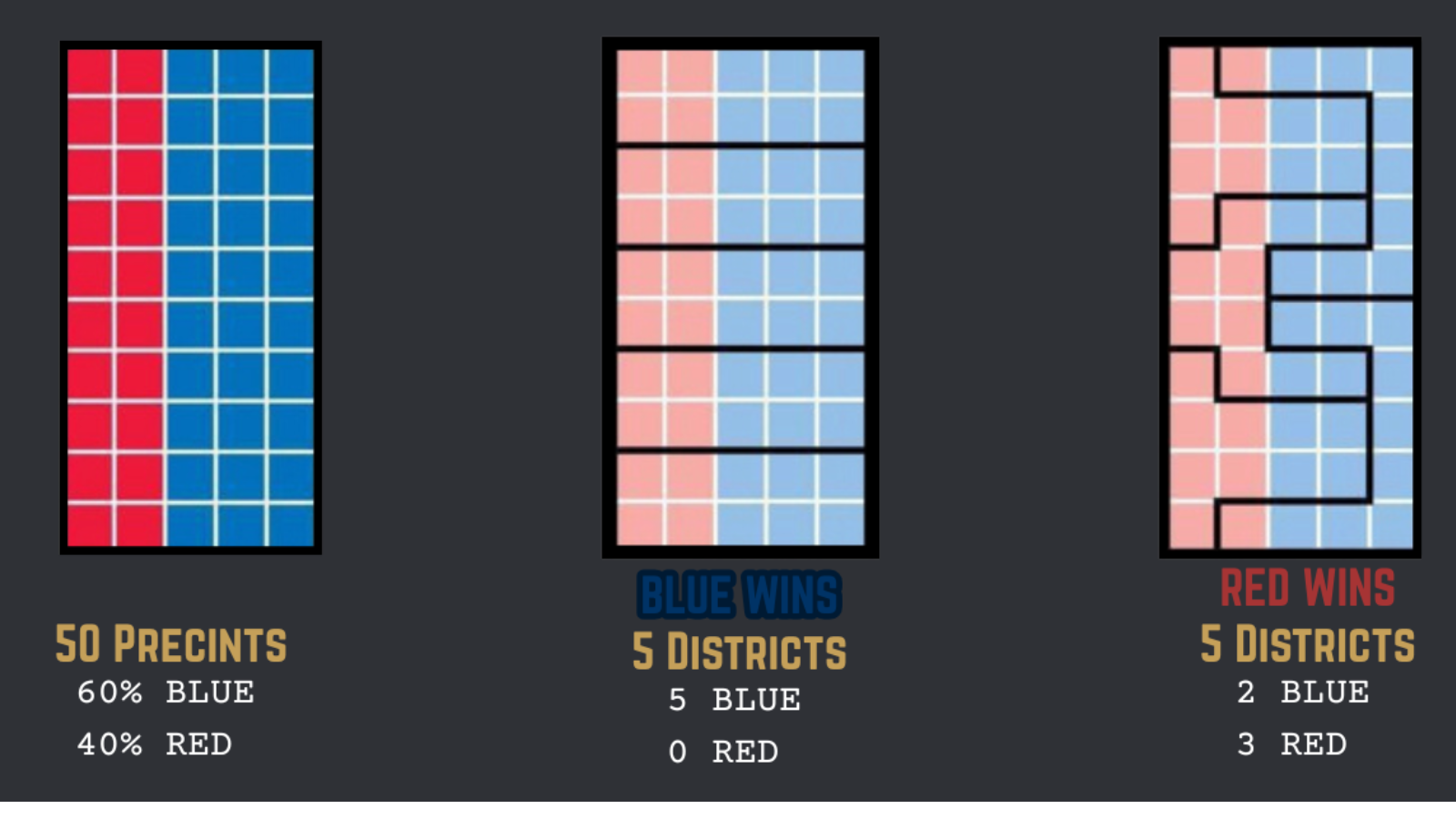
Use both at the same time and you can win a majority of seats even when the other side has more total voters. This is not a theory. It happened in 2012, with documented proof, and I'll get there.
Now, the law treats two different kinds of gerrymandering in very different ways.
Partisan gerrymandering means you drew the lines to help your party. Racial gerrymandering means you drew the lines based mainly on race. Racial gerrymandering is unconstitutional. Partisan gerrymandering, as of 2019, is not a federal legal problem at all. Courts decided they're not getting involved.
That split is where every fight is happening right now. Politicians who want to carve up a Black or Latino neighborhood just have to say they were thinking about politics, not race. Then they're legally in the clear.
The bottom line: the shape of your district determines whether your vote actually counts, or whether it was decided before you even walked in.
The Setup
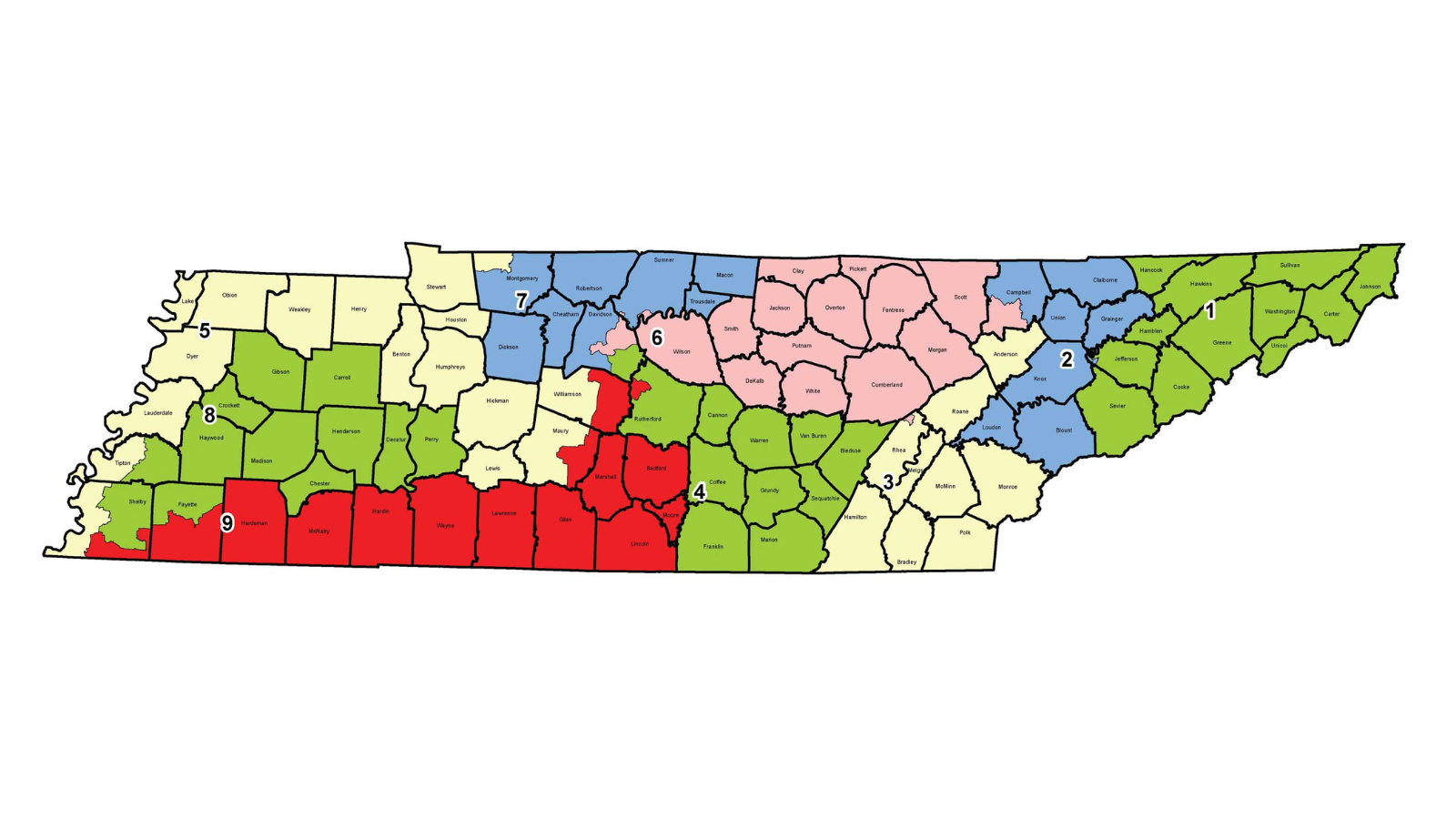
On May 7, 2026, Tennessee Republicans called a special session and redrew the state's congressional map. Memphis, a majority-Black city, got split three ways. The state's only majority-Black congressional district is gone. The only Democratic seat in Tennessee's congressional delegation is gone. Governor Bill Lee signed it the same day it passed, according to ABC News.
On May 8, Virginia's Supreme Court threw out a redistricting change that voters had just approved at the ballot box by a 53-47 margin. Twelve days after the vote. Gone, per Democracy Docket.
On April 29, the U.S. Supreme Court ruled 6-3 that Louisiana was not allowed to draw a second majority-Black congressional district, even though a different court had ordered them to do exactly that. The ruling made it illegal, in certain situations, to even try to comply with the Voting Rights Act, as SCOTUSblog explained.
Three things. Eleven days. All connected.
Gerrymandering is not a scandal. It is a system. It has been running since before the word for it existed. What happened in the last two weeks is the latest turn of a machine that has been operating for over 200 years. To understand it, you have to go back to the beginning.
This Is Older Than You Think
Start in England.
Before America existed, the British Parliament had what they called "rotten boroughs." These were voting districts with almost no people in them. A wealthy political operator would buy the votes of the handful of people who lived there and get two seats in Parliament out of it. There were districts with eleven total voters sending two representatives to Parliament. The colonists thought this was disgusting. They said it was corrupt. They used it as one of the reasons to break from Britain.
Then they went home and started doing their own version of it.
James Madison, at the 1787 Constitutional Convention, literally warned his fellow founders that state legislatures could "mold their regulations" to give advantages to preferred candidates. He put it in writing. The ink on the Constitution was barely dry. He was right, and he found that out the hard way the very next year.
In 1788, Virginia drew its first congressional district maps. Patrick Henry, who ran the Anti-Federalist bloc in the state legislature, was accused of drawing the 5th District specifically to put Madison in a race he couldn't win, against a guy named James Monroe. Madison ran anyway and beat Monroe. That is the only House race in U.S. history between two future presidents. A 2011 academic study by Thomas Rogers Hunter, published in Early American Studies, looked at the actual maps and concluded that the Patrick Henry story is based mostly on Madison's own complaints and the map itself was actually pretty compact. So the accusation may be the first gerrymander claim in American history. Whether it was actually rigged is still disputed. Either way, the argument is 238 years old. This problem did not start on cable news.
The word itself came 24 years after that.
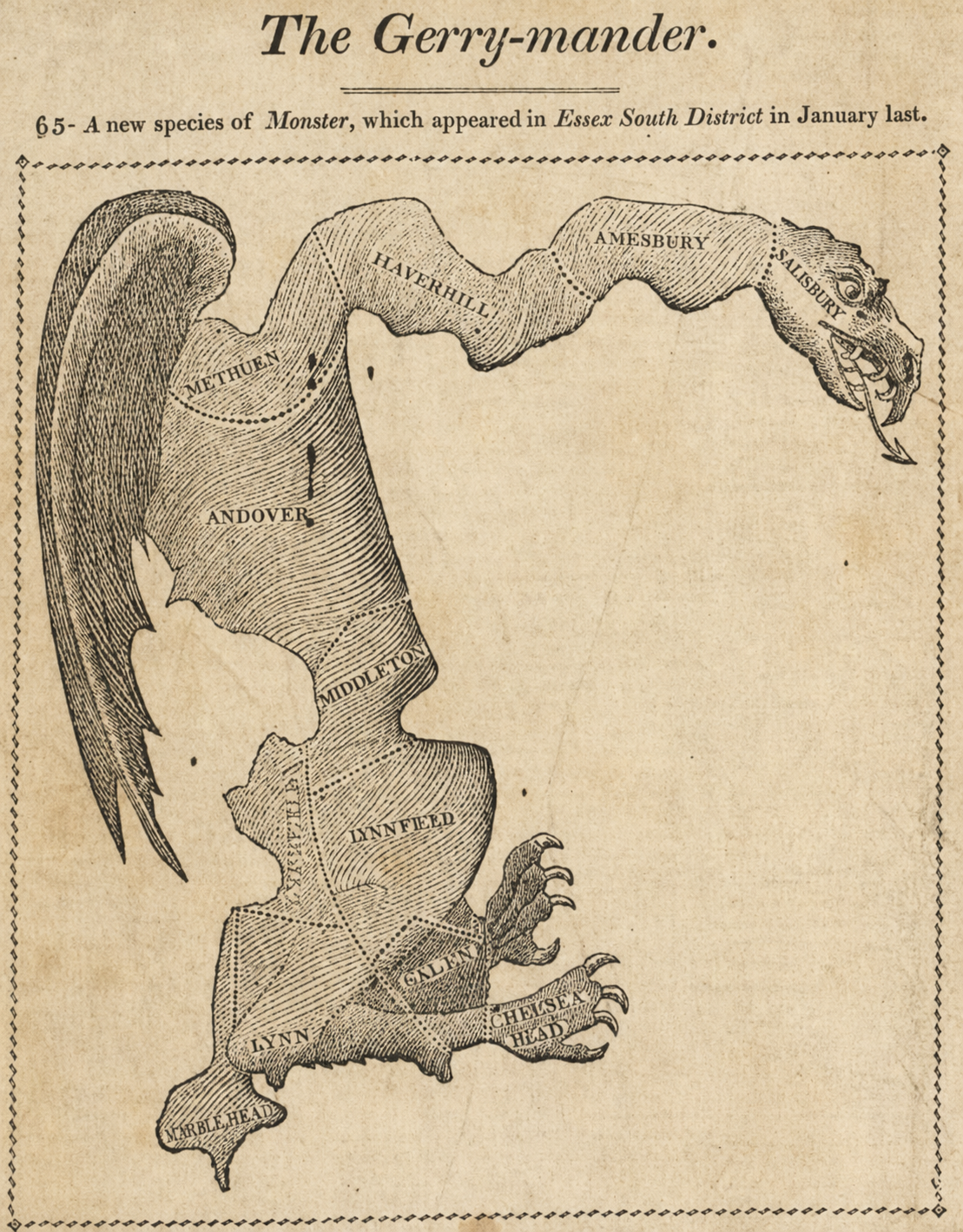
On February 11, 1812, Massachusetts Governor Elbridge Gerry signed a redistricting bill that twisted a state senate district in Essex County into a weird snake-like shape. The whole point was to squeeze Federalist voters into one seat while spreading the Democratic-Republicans across enough districts to dominate the state. The Boston Gazette published a cartoon on March 26, 1812 comparing the district to a salamander and slapped Gerry's name on it. "Gerrymander." Within months, newspapers in Maryland, New York, and other states were using the word. Gerry reportedly hated that he signed it. Didn't matter. The word stuck and so did the practice.
In 1842, Congress passed a law requiring all House members to come from single-member districts, per the U.S. House's own historical record. Before that, states could run everyone on a statewide ballot. Now every seat had a specific geographic district, which meant every line on the map mattered. Four states ignored the law immediately. Congress seated those members anyway. The enforcement was basically nothing. But the game was now official.
The late 1800s were the most aggressive gerrymandering period of the whole 19th century. Ohio alone redrew its congressional maps seven times in fourteen years, according to the Election Law Blog. Both parties did it. Republicans in Congress even split the Dakota Territory into two states instead of one just to get extra Electoral College votes. You read that right. They added a whole state to rig an election.
By the 20th century, some states just... stopped updating their maps. They liked what they had. Courts refused to get involved. Politicians kept winning in districts that hadn't changed in decades even as the population shifted dramatically. That lasted until 1962.
In 2010, Republicans ran a coordinated plan called REDMAP. The name stands for Redistricting Majority Project. The strategy was simple: every ten years, after the census, somebody redraws the congressional maps. Whoever controls the state legislature controls who holds the pen. So Republicans put together about $30 million and targeted state legislative seats specifically in census year, 2010. Win the right state houses in the right states, and you own the next decade of congressional maps.
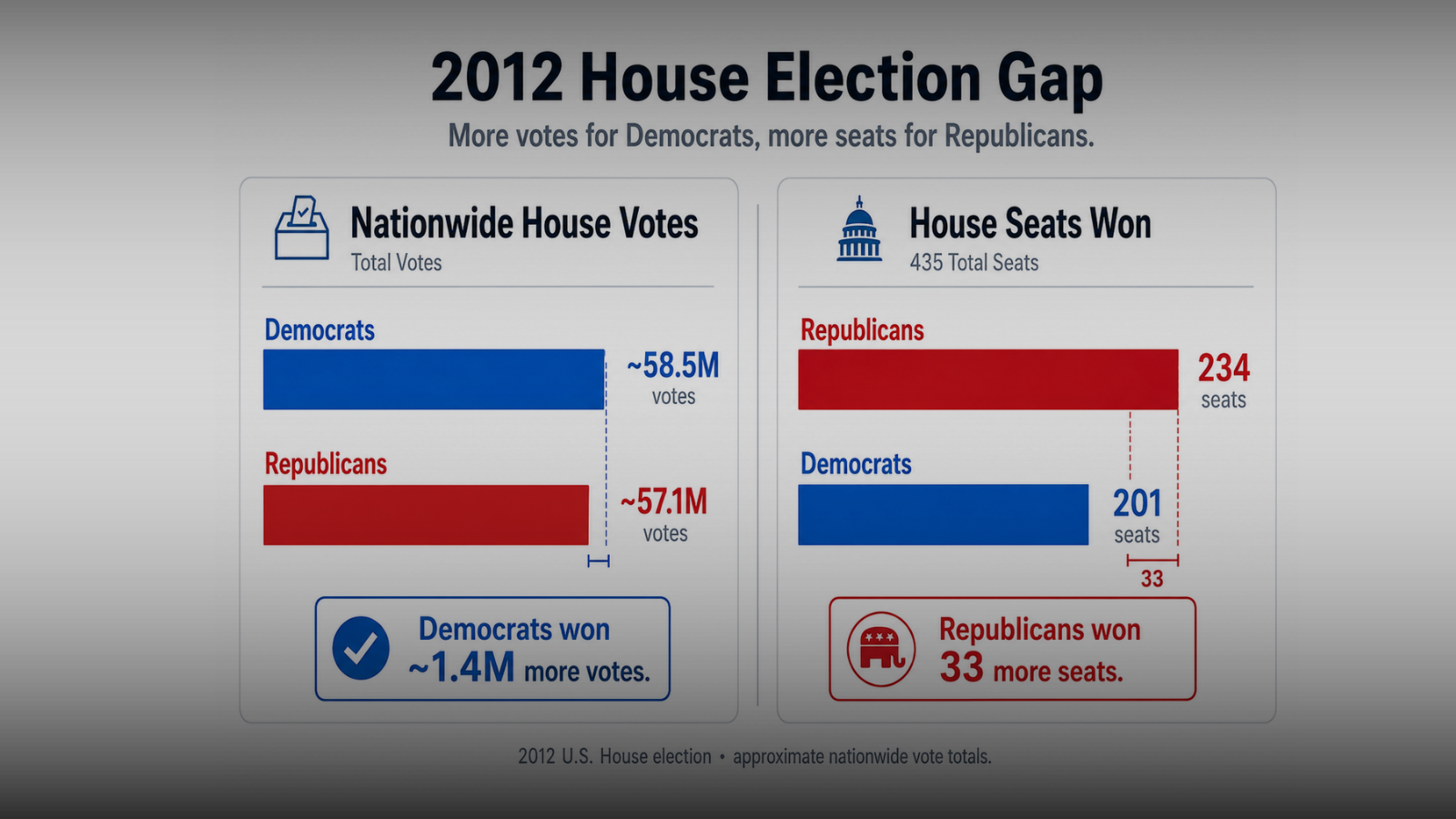
It worked. In 2012, the first full election under the new maps, Democratic House candidates received about 1.4 million more total votes than Republican candidates across the entire country. Republicans kept the House anyway, by 33 seats. More votes. Fewer seats. That gap is documented by the Brennan Center and confirmed by PolitiFact. Author David Daley later wrote a book about the whole operation called Ratf**ked. The title tells you how he felt about it.
What is happening right now is different from REDMAP in one way. REDMAP worked inside the normal ten-year census cycle. What's happening now is mid-decade. Maps are being redrawn outside the census schedule, pushed directly by the White House. Republicans are doing it in states they control. Democrats are running the same play in states they control. California voters passed Proposition 50 in November 2025, 65 to 35, to let their legislature replace the independent commission's map with one that helps Democrats. Virginia's Democrats tried to flip 10 of 11 congressional districts their way. California's map is in effect. Virginia's got thrown out on a procedural violation they created themselves.
Both parties. Same play.
The Courts Enter the Picture
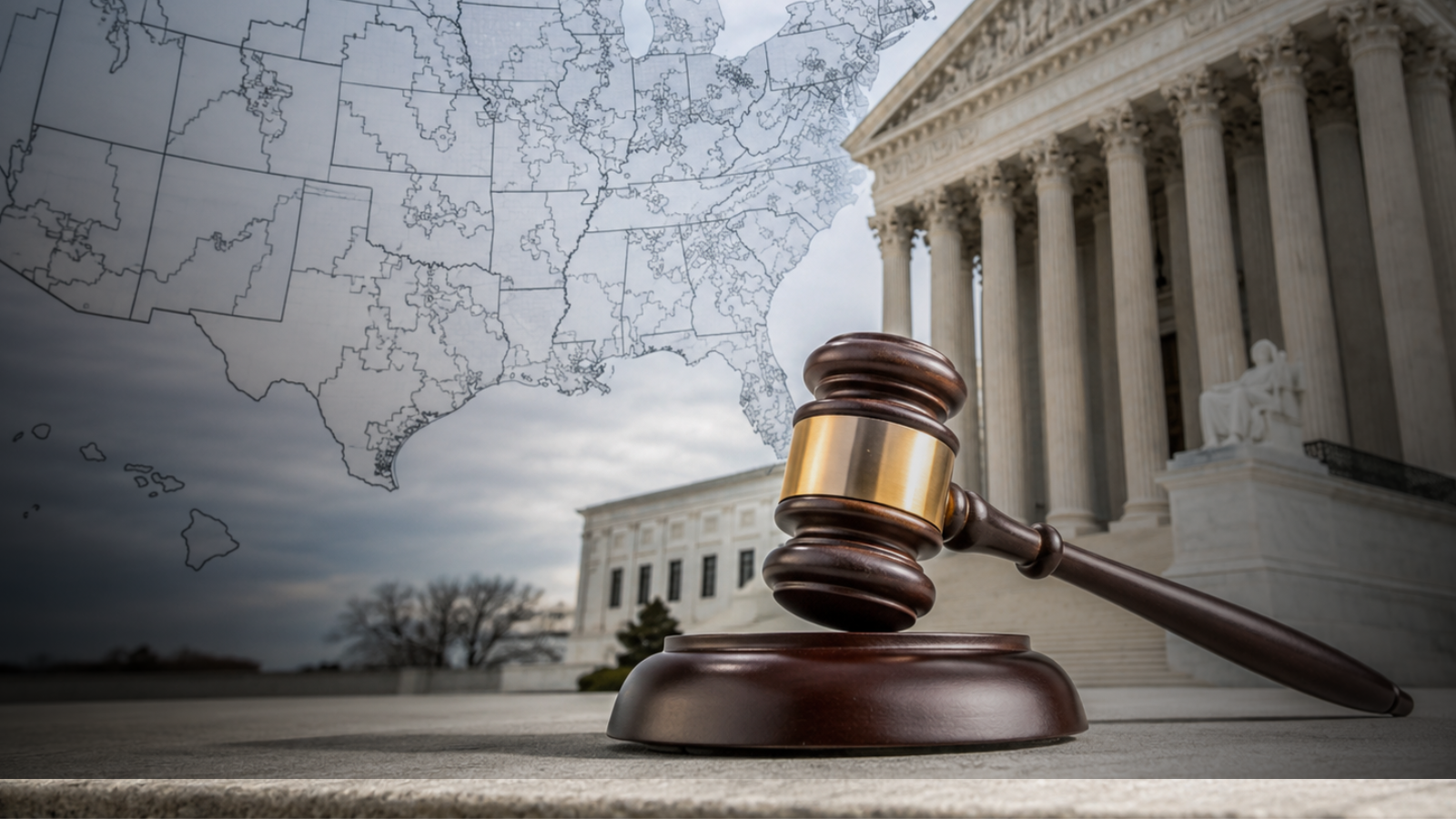
For the first 175 years of American history, courts wanted nothing to do with redistricting. Judges called it a "political question" and refused to touch it. States drew whatever maps they wanted.
That changed in 1962.
Tennessee hadn't updated its state legislative maps since 1901. The population of cities had grown massively, but the maps never caught up. Some rural districts had a tiny fraction of the voters that urban districts had, meaning a rural vote was worth several city votes. A voter named Charles Baker sued, and the case went to the Supreme Court. The Court ruled that yes, federal courts can hear redistricting cases. That was Baker v. Carr (1962). Chief Justice Earl Warren called it possibly the most important ruling of his career, per the Federal Judicial Center.
Two years later, Reynolds v. Sims (1964) set the rule. "Legislators represent people, not trees or acres," Warren wrote. Every district has to have roughly the same number of people. One person, one vote. Every state had to go back and redraw.
Then race became the central fight, and it still is.
In 1986, the Supreme Court handed down Thornburg v. Gingles. The case came out of North Carolina. The Court said this: if a minority group is big enough and compact enough to fill a district, votes together, and keeps losing because the white majority votes as a bloc against them, the Voting Rights Act may require you to draw them a district where they can actually win. This became the foundation for majority-Black and majority-Latino districts across the South.
Seven years later, the Court created the paradox that still hasn't been resolved.
Shaw v. Reno (1993) came out of North Carolina again. The state drew a majority-Black district that was so oddly shaped, a narrow corridor snaking along an interstate highway, that white voters sued and said it was unconstitutional. The Court agreed. Race cannot be the main reason you draw a district. If it is, the map has to pass "strict scrutiny," which means the government has to prove it had a very good reason and drew as narrow a line as possible.
So here is the trap: the Voting Rights Act might require you to consider race when drawing districts. But the Constitution says race cannot be the primary reason. That contradiction never got resolved. It just got worse.
In 2019, Rucho v. Common Cause shut the federal courthouse door on the whole partisan side of this.
North Carolina had a Republican gerrymander so extreme that the people who drew it bragged about it on the record. Maryland had a Democratic gerrymander the same way. Both cases came to the Supreme Court. Chief Justice Roberts wrote the 5-4 decision: federal courts cannot decide when partisan gerrymandering goes too far. There is no workable legal standard. Go to your state courts if you don't like it. Federal courts are out of the partisan gerrymandering business, and that is the law right now.
State courts have stepped in. Pennsylvania and North Carolina both used their own state constitutions to strike down maps that federal courts wouldn't touch. That avenue still exists, but it depends on your state's judges and your state's constitution.
Then came the one that changed everything this spring.
In 2023, the Supreme Court told Louisiana it had to draw a second majority-Black congressional district because the existing maps diluted Black voting power. Louisiana went and drew that district. Then white voters sued and said the new map was itself an unconstitutional racial gerrymander. The Supreme Court agreed with them, 6-3. The ruling, Louisiana v. Callais (April 29, 2026), said that because the Court's majority didn't think the Voting Rights Act actually required that second district, Louisiana had no good enough reason to draw it with race as a major factor. So the map they drew to follow court orders was ruled unconstitutional.
Justice Elena Kagan wrote the dissent. She said plainly that the majority had gutted Section 2 of the Voting Rights Act as an enforcement tool.
Tennessee signed its new map, the one that eliminated its only majority-Black district, eight days later. They cited this ruling as their legal cover. The timing was not a coincidence.
The result of these two rulings combined: a legislature can stand up and admit, out loud, that they drew the map to help their party, and no federal court will do anything about it. But if a court finds race was the main reason, the map is dead. So from now on, every racial gerrymander will be defended as "purely partisan." The distinction between the two is being erased on purpose.
What Each Side Actually Argues
This section presents both arguments as their supporters make them. No thumb on the scale.
What the left argues:
Gerrymandering breaks representative democracy. The 2012 numbers say it plainly: Democrats got more votes nationwide and Republicans kept the House by 33 seats. A government that doesn't reflect how people actually voted isn't really a representative government.
When a legislator can't lose a general election, the only real threat to their career is a primary challenger from their own party, usually someone more extreme. That happens on both sides. Over time you end up with a legislature full of people who only have to please the most fired-up members of their own base. Governing becomes impossible. The gridlock and dysfunction that drives everyone crazy is, in part, a map problem.
Black and Latino communities take the biggest hit when partisan maps split up their neighborhoods on purpose. Tennessee made that obvious this week. Cracking Memphis across three districts is not a politically neutral act.
The fix: take the pen away from politicians entirely. Independent commissions. Let someone else draw the lines.
What the right argues:
Article I of the Constitution gives states the power to run their own elections. That includes drawing their own maps. Federal courts have no business telling state legislatures how to do it. Roberts made this point in Rucho and the legal logic is solid.
Both parties have done this for over 200 years. Calling it a Republican problem is a talking point Democrats use in between their own gerrymanders. California passed Prop 50 with 65 percent of the vote specifically to swap out their independent commission's map for one that helps Democrats. Virginia's Democrats spent months trying to flip 10 of 11 congressional districts. The concern for "democracy" has a way of disappearing when your party has the pen.
Some conservatives also argue that majority-minority districts can actually be better for minority voters than spreading them thin across a lot of districts where they never have enough votes to win anything. Concentrating power can mean more real influence, not less.
And "independent" commissions aren't actually neutral. They're staffed by people who have opinions. The "nonpartisan" label gets slapped on and then ripped off the moment a commission produces a map someone doesn't like.
What both sides share and won't admit:
They both do it when they're in charge. Every time. The principles disappear the moment the other party controls the process. California and Virginia in 2025 and 2026 aren't footnotes to this debate. They're the whole argument.
Is It Constitutional?
Direct answers.
| Type | Where Things Stand |
|---|---|
| Partisan gerrymandering | Legal under federal law. Rucho v. Common Cause (2019). Federal courts will not hear the challenge. State courts may. |
| Racial gerrymandering | Unconstitutional. Race cannot be the main reason for district lines. Shaw v. Reno (1993). |
| Drawing districts to comply with the Voting Rights Act | Now a legal trap. Louisiana v. Callais (2026) made it possible for that compliance to itself be ruled unconstitutional. |
The short answer: partisan gerrymandering is legal at the federal level. Racial gerrymandering is not. The line between the two is getting blurrier by the week.
State courts and state constitutions are the last real avenue for challenging partisan maps in federal court's absence. Pennsylvania did it. North Carolina did it. Whether it works in your state depends on your state's judges and your state's constitution. Check both.
What Can Actually Fix It
Three options. Two work sometimes. One works reliably and almost nobody copies it.
Independent redistricting commissions exist in Arizona, Michigan, Colorado, and several other states. They take the drawing out of politicians' hands. The maps they produce are measurably fairer by most standards. California had one until voters dissolved it in 2025 to get a more favorable map. No commission is fully immune to politics, but the track record beats letting the beneficiaries draw their own maps.
Math-based fairness tools can measure whether a map is an outlier. Researchers generate thousands of alternative maps for a state and then compare the proposed map against all of them. If it sticks out as wildly skewed, that's evidence something is wrong. Courts have seen this analysis. It still works in state courts even if Rucho shut the federal door.
The Iowa model has been running since 1980 and has never broken down. Iowa's nonpartisan Legislative Services Agency draws the maps. A bipartisan panel reviews them. The legislature can say yes or no but cannot change a single line. Political party data is not allowed in the process at all. In 45 years, not one Iowa redistricting map has been taken to court successfully. The Princeton Gerrymandering Project grades Iowa's 2021 congressional map a B and its state legislative maps an A, per their report cards. Both are among the best scores in the country.
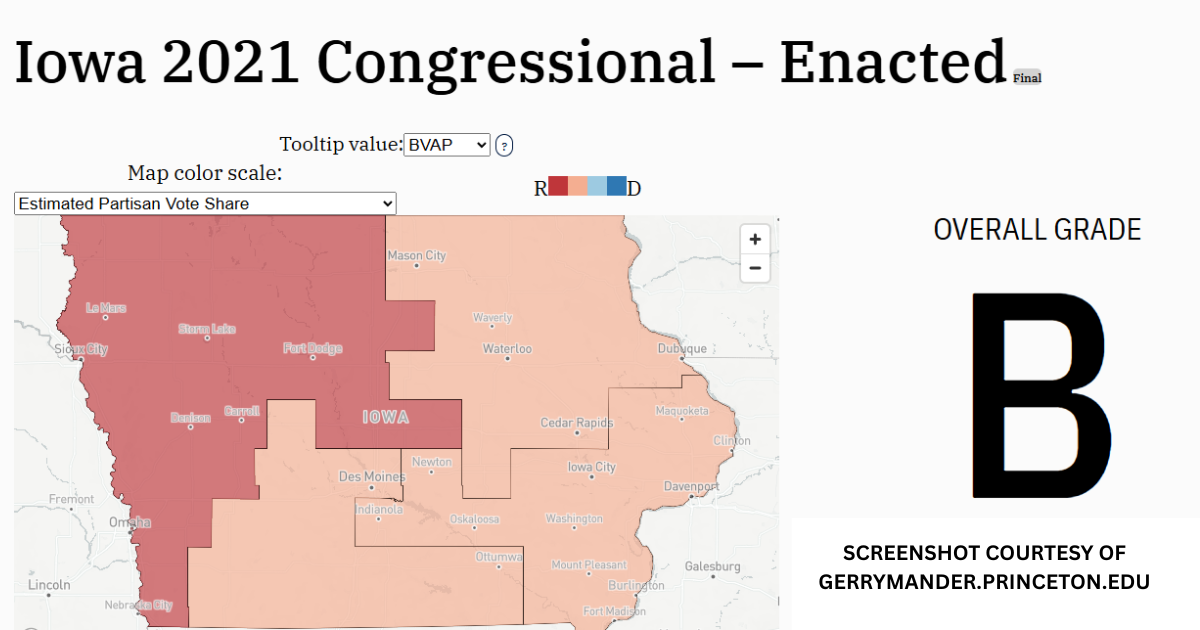
No other state has fully copied this. Wisconsin has introduced the Iowa model as a bill in every single legislative session since 2011. It has never passed, per the NCSL. Part of Iowa's success comes from the fact that the state is genuinely competitive by nature, having voted for Obama twice and Trump twice. The process deserves real credit, but it isn't a magic fix that transplants perfectly everywhere.
The reason nothing changes is simple. The people who would have to vote to reform the system are the people the current system protects.
Turkeys don't vote for Thanksgiving.
The one path that has actually worked is going around the legislature entirely. Ballot initiatives. Arizona, Michigan, Colorado, and Missouri all passed redistricting reform by putting the question directly to voters. In every case the legislature refused to do it themselves. In every case voters passed it anyway. If your state has a ballot initiative process, that is the lever.
Virginia tried this exact path in 2025 and 2026. Democrats pushed through a redistricting constitutional amendment. Voters approved it, 53 to 47. Close, but a win. Twelve days later, the Virginia Supreme Court threw it out. Not because of anything voters did wrong. Because Democrats had passed the first reading of the amendment while early voting was already underway in the 2025 state elections, which technically violated Virginia's rules for amending the constitution. A procedural violation they created themselves, on their own timeline, tanked the whole thing. Even when voters say yes, the path is not clear.
What This Means
Your vote's real weight depends on where your lines are drawn. Two people in the same county, voting for the same candidate, can have completely different amounts of political influence just because of which district they happen to be in. Think about the Electoral College. A vote cast in Pennsylvania matters more to a presidential race than the same vote cast in deep-red Wyoming or deep-blue California, because Pennsylvania is competitive. Gerrymandering works the same way at the congressional level. Where you live determines how much weight your vote carries. The difference is the Electoral College is locked into the Constitution. Gerrymandered maps are drawn by politicians, for politicians, and redrawn every decade by whoever won the last state house race.
The races at the bottom of your ballot matter more than most people realize. The state rep candidate most people skip over in November helps decide who controls the map-drawing pen after the next census. Presidential elections get the attention. State legislatures get the maps.
I am against gerrymandering. Not because one party is doing it more right now, both are clearly running the same play. I'm against it because it breaks the basic feedback loop between what voters want and what their government does. A legislator who cannot lose a general election has no real reason to represent anyone except the small slice of their own party that decides primaries. That is not what a representative is supposed to be. And if we are being honest with each other, the people we elect stop caring about their constituents once they have the power.
The machine has run for 200 years because it works for the people who run it. The only thing that has ever slowed it is voters who paid attention to the right races and used every tool available to take the pen away.
Find out who draws the maps in your state. Find out how. If your state has an initiative process, that is your opening.
Kane
Sources & Further Reading
Primary Sources
- SCOVA opinion, Virginia redistricting (May 8, 2026): vacourts.gov
- SCOTUS opinion, Louisiana v. Callais (April 29, 2026): supremecourt.gov
- SCOTUS opinion, Rucho v. Common Cause (2019): supremecourt.gov
- Hunter, Thomas Rogers. "The First Gerrymander?" Early American Studies, Vol. 9, No. 3 (Fall 2011): jstor.org
Secondary Sources
- ABC News (Tennessee, May 7, 2026): ABC News
- Democracy Docket (Virginia ruling): Democracy Docket
- SCOTUSblog (Callais): SCOTUSblog
- Brennan Center (2012 redistricting): Brennan Center
- PolitiFact (2012 House vote totals): PolitiFact
- Election Law Blog (post-Reconstruction gerrymandering): Election Law Blog
- Federal Judicial Center (Baker v. Carr): Federal Judicial Center
- Library of Congress (origin of "gerrymander"): Library of Congress
- Smithsonian (origin of the term): Smithsonian
- U.S. House historical record (1842 Apportionment Act): U.S. House
Further Reading
- Daley, David. Ratf**ked: Why Your Vote Doesn't Count (2016)
- Princeton Gerrymandering Project: gerrymander.princeton.edu
- NCSL Iowa model explainer: NCSL
- NAACP (Tennessee lawsuit): NAACP
- Brennan Center (Callais): Brennan Center
- Ballotpedia (California Proposition 50): Ballotpedia