BLUF: Civilians have been using military slang for years and getting most of it wrong. This is the Army's field guide to what we're actually saying, from SNAFU to Soup Sandwich. Some of these you think you know. You don't. By the end of this, you will.
Hollywood has had 80 years to teach civilians about military language. Hollywood has done a terrible job.
The phrases are everywhere now. SNAFU in the boardroom. "Embrace the suck" on a coffee mug. "OPSEC" in Instagram bios. Civilians picked up the vocabulary and left the meaning behind. The words are good words. They earned their spot in the culture. But the definitions got lost somewhere between the screen and the street.
I'm going to fix that.
We're covering the Army edition here, because that's what I know, and because the Army is the best branch. This is not up for debate. If you served in the Navy, Marines, Air Force, or Coast Guard, some of this will translate. Adjust where needed. You're still welcome.
One quick note before we start: the military uses a phonetic alphabet so letters don't get garbled on the radio. Alpha, Bravo, Charlie, Foxtrot. A, B, C, F. You'll need that for a couple of entries below.
Let's go.
The Classics: You Know These. You Got Them Half Right.
01. SNAFU (Situation Normal: All F'd Up)
Civilians use this to mean a hiccup. A minor setback. A little mix-up at the office.
The word was invented by World War II GIs mocking the Army's obsession with acronyms. First print citation: Kansas City Star, July 1941. The joke lives entirely in the word "Normal."
SNAFU means everything is broken, and that is the expected state of affairs.
It was not named to describe exceptions. It was named to describe Tuesday. Next time your boss calls a supply chain collapse "just a little snafu," know that he has technically admitted that chaos is the operational baseline and everyone has accepted it.
02. FUBAR (F**ked Up Beyond All Recognition)
Same generation as SNAFU. Same cynical GI energy. First documented in the Army's own publication, Yank, the Army Weekly, January 1944.
Civilians treat FUBAR as a stronger version of SNAFU. That's close, but they miss the finality. SNAFU is a Tuesday. FUBAR is a eulogy. If something is FUBAR, you do not fix it. You fill out the paperwork and walk away.
03. Charlie Foxtrot
NATO phonetic alphabet: C and F. You know what it stands for.
The phonetic version exists because radio communications have to stay clean. You cannot broadcast the full phrase over the net. So the alphabet became the workaround. Charlie Foxtrot is what you say when you need to accurately describe the situation and your chain of command is within earshot.
Civilians think it's some kind of tactical code for a disaster. It is. Just not a complicated one.
The One You Don't Know (But Should)
04. Blue Falcon (Bravo Foxtrot)
Same phonetic trick. B and F.
Civilians don't have this one in their vocabulary because they've never needed it. The military invented it because they absolutely did.
A Blue Falcon is the soldier who screws over his battle buddy to save himself, or to score points with leadership. The one who volunteers information up the chain that gets his own people smoked. The one polishing his boots while everyone else is in the dirt.
We all knew one. If you didn't, it was you.
Daily Life in the Formation
05. Hurry Up and Wait
This one goes back to World War II. It has been in continuous operation since 1945 and will outlast everything.
The Army requires everyone to be somewhere at a specific time. Getting a formation somewhere requires coordination. Coordination is imperfect. So you sprint to the bus at 0500 and the bus leaves at 0900. You stand in formation for four hours while one thing finishes before the next thing can start.
This is the real backbone of the Army. You will spend more time waiting than doing. That is not a flaw in the system.
It is the system.
06. Voluntold
A combination of "volunteer" and "told." Military use goes back to at least the 1970s. It has since spread to churches, corporate offices, and every organization that needs warm bodies on short notice.
Here is how it works. Leadership needs someone to do a thing. They call for volunteers. Nobody moves. One soldier makes the mistake of making eye contact.
That soldier has now volunteered.
The moment you blinked, you were committed. There was no choice. There was only the illusion of a choice before the eye contact happened.
07. Squared Away
This one actually originates with the Navy. In the age of sail, squaring the yards (the spars that hold the sails) meant the ship was tidy and ready to move. The phrase came ashore.
"Squared away" can mean someone is genuinely sharp, prepared, and on top of their business. A real compliment when delivered straight.
It can also be the three most dangerous words your NCO says. "Oh, you're real squared away, aren't you," delivered slowly while looking at your wall locker during inspection, is not a compliment. It means you have failed to meet the standard in a way that has temporarily entertained everyone watching. Learn to read the room. The wall locker already knows.
08. Embrace the Suck
Civilians put this on coffee mugs. LinkedIn posts. Motivational calendars. Gym bag embroidery.
I'm not 100% sure of where this one originated. Some say 2001 Afghanistan while others say 2003 Iraq. I remember hearing it in 2003 but not in Iraq, in Hohenfels, Germany. And anyone who has ever trained there knows what I am talking about.
It will rain when you are in the field. The gear will be heavy. The op will start late because of hurry up and wait. Conditions will be objectively bad and there is nothing to be done about it.
Embrace the suck is a command, not a comfort.
It means accept this, stop complaining, and move. The NCO is not offering sympathy. The NCO is telling you to function.
Put that on your coffee mug.
Sarcasm-Dependent (Tone Is Everything)
These next entries can mean completely different things depending on how fast they come out of an NCO's mouth. Speed and delivery are everything.
09. Outstanding / Motivated
These two operate identically, so I'm running them together.
"Outstanding" is the most dangerous word in the NCO arsenal. Said with genuine warmth, it means you did something right. Said slowly, flatly, while watching you fail at something basic, it means you have illustrated the NCO's point without any assistance whatsoever. You have done the job for them.
"Motivated" during a smoke session is not encouragement. It means the smoke session is about to get longer.
Civilians who use "motivated" unironically in a military context sound like they copied it off a recruiter's office poster.
Context clue: if it comes out slow and flat, start doing push-ups.
10. High Speed Low Drag
The full phrase is "high speed, low drag." Aerodynamics. Something that cuts through air cleanly, without resistance.
Used genuinely: someone is competent, effective, and getting things done. A hard charger. A real compliment when earned.
Used sarcastically: applied to the soldier who is the opposite of every one of those things. Slow. Catching every obstacle. Making simple things complicated. "Oh yeah, he's real high speed."
The tell is in the delivery. Genuine version has energy behind it. Sarcastic version sounds like a man watching something burn.
Discipline and Disorder
11. Getting Smoked / Smoke Session
A smoke session is an NCO-initiated PT session used as informal punishment. Push-ups, flutter kicks, up-downs, whatever the NCO has in mind, until exhaustion. Typically five to fifteen minutes. Feels like forty-five.
Getting smoked means receiving that treatment.
My nephew just graduated Navy boot camp. He described getting "beat up" by the drill instructors. He meant getting smoked. Every branch calls it something slightly different, but every branch does it. There is not a single person who has enlisted in any branch of the United States military who does not know what getting smoked means.
Civilians hear "smoke" and think cigarettes or a barbeque. Bless their hearts.
12. Soup Sandwich
Someone or something that is fundamentally, irreparably disorganized. Cannot function. Will not function.
The phrase works because of the physics. You cannot make a sandwich out of soup. The container fails. The form fails. The entire concept fails before it starts.
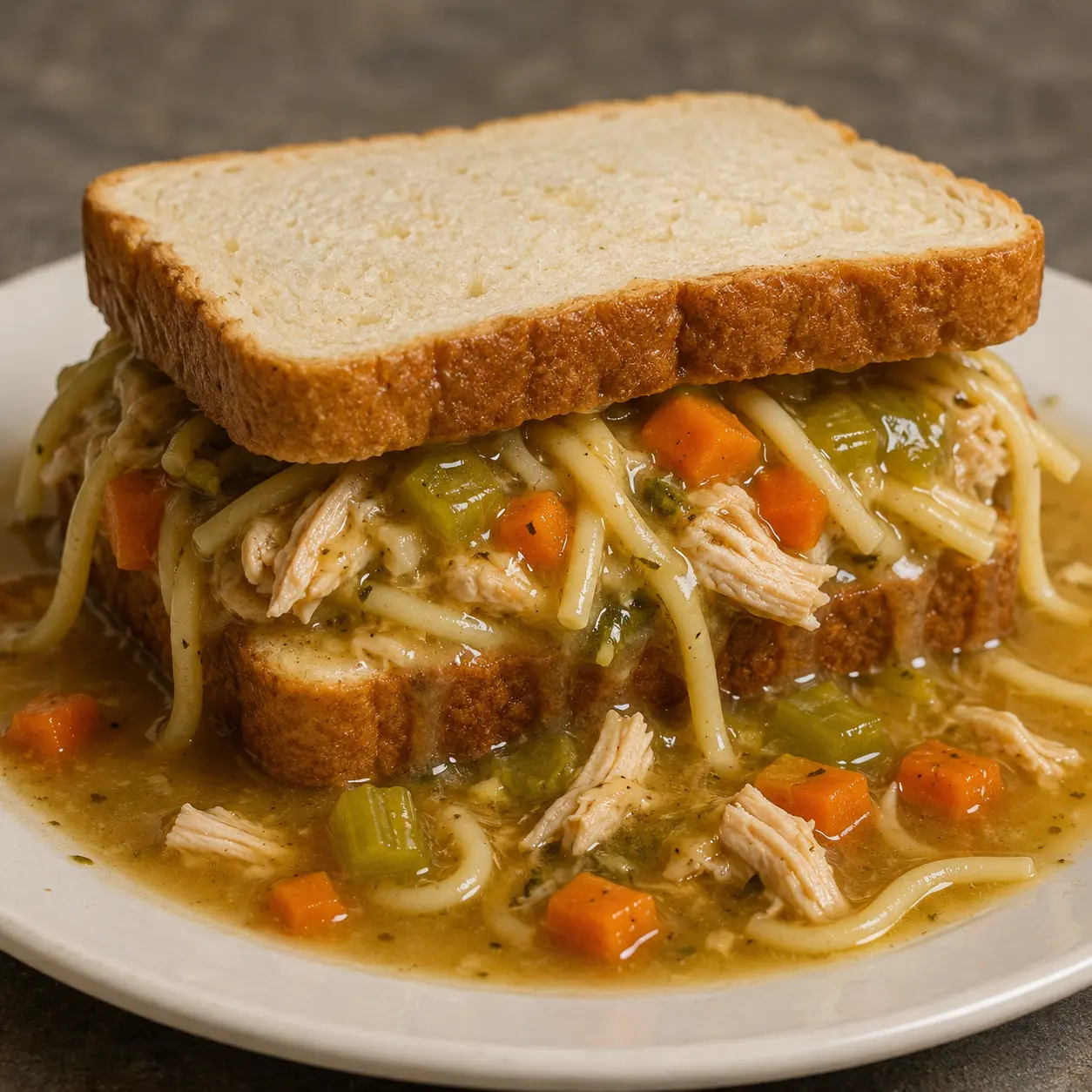
Applied freely to people, plans, formations, vehicles, briefings, and entire units. "That operation was a soup sandwich" means it achieved nothing and never had a chance.
13. Ate Up
Two different failure modes, one phrase. "Ate up" can mean someone is so regulation-obsessed they've lost all common sense. Or it can mean someone is a complete mess who can't get it together. Context tells you which.
I know this one personally.
I was in Infantry in-processing at 30th AG, held there three weeks before moving to Week 1 of Basic Training. I forget the exact reason, which is itself a little bit ate up. We were a formation of dumb privates getting smoked by the drill sergeants, and at one point we were ordered to scream "WE'RE ATE UP" at another company-sized element of screw-ups across the lot while they yelled the same thing back at us. Both formations doing overhead arm claps for what felt like an eternity.
At the time I had absolutely no idea what it meant. I genuinely thought we were yelling "WE'RE 8 UP" like we were keeping score.
Eventually I came to understand exactly how ate up I really was.
Terms You Borrowed and Watered Down
Civilians have picked up a handful of military terms for everyday use. The spirit is mostly right. The paperwork is gone.
- OPSEC (Operational Security): In the military, this is a formal five-step process for identifying and protecting critical information from adversaries. Checklists, briefings, sign-offs. Civilian version: "don't post your vacation dates on Instagram." Technically correct in spirit. About 90% of the process is missing.
- Danger Close: In the military, this means your artillery or air support is close enough to hit your own people. Requires special authorization and a verbal acknowledgment that friendly casualties are possible. Civilian version: "that deadline is danger close." The seriousness is real. The risk of getting blown up by your own fire mission is not.
- And one for the Air Force: you have the FOD walk. The entire flight line, in formation, walking slowly and picking up tiny rocks and loose screws so jet engines don't eat them and die. There is no civilian equivalent. It is equal parts absurd and completely sincere. Respect.
You're In on It Now
The language was built under pressure. SNAFU and FUBAR came from soldiers who needed shorthand for chaos. Embrace the suck came from people who had to keep moving in conditions most civilians will never see. Ate up came from a drill sergeant trying to make a formation of confused privates understand what kind of shape they were in.
The vocabulary is the initiation. The meaning is the point.
Now you have both.
Kane